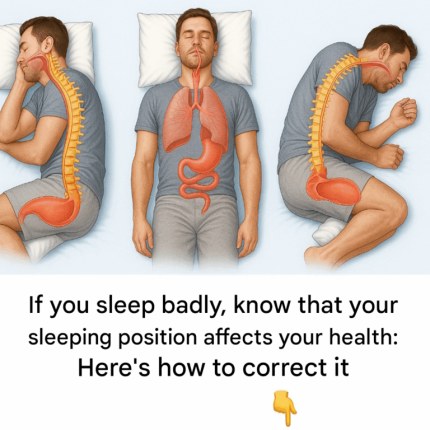
What if the key to peaceful nights and waking up refreshed was hidden in your sleeping posture? Whether you lie on your back, side, or stomach, each position affects your health without you even realizing it. Discover how to optimize your sleep to avoid daily tension and fatigue.
These signals your body is sending you (and you’re ignoring):
Loud snoring, migraines upon waking, a feeling of suffocation, acid reflux or persistent fatigue despite a full night’s sleep… These problems are often attributed to stress or an unsuitable mattress , when they could simply be due to a poor sleeping position.
Because sleep isn’t just about rest: it’s a time when our bodies actively work to regenerate. Improper posture disrupts this essential process, sometimes with lasting consequences.
Left-Sided Magic: More Than Just a Trend:

Favoring the left side while sleeping isn’t just a yoga practitioner’s fad. This orientation offers real physiological benefits: improved digestion, reduced gastric reflux, stimulation of the lymphatic system, and a notable advantage for expectant mothers by optimizing blood flow to the fetus.
Science reveals another little-known advantage: this position promotes the activity of the glymphatic system, the brain’s mechanism for eliminating toxins that could prevent certain neurodegenerative pathologies.
The balance sheet of other night positions:

On your back: Ideal for spinal alignment, but problematic in cases of snoring or apnea. This position reduces blood oxygenation and impairs the quality of deep sleep.
Lying face down: The worst option. It causes cervical torsion, compresses digestive organs, and impedes breathing—a winning combination for muscle pain and difficult waking.
Right side: Less harmful than the prone position, but likely to aggravate gastric reflux and overload liver function.