Cleaning up after cooking can sometimes feel like a bigger task than the cooking itself. Many of us have developed habits over time that we think make the process easier, but some of these habits might actually be causing more harm than good. Whether it’s damaging your cookware, clogging your pipes, or compromising kitchen safety, being aware of these common mistakes is the first step to a more efficient and effective cleanup process.
In this article, we’ll explore 10 common cooking cleanup habits that you might be doing wrong. By understanding the right techniques and adjustments, you can save time, extend the life of your kitchen tools, and maintain a cleaner and more organized kitchen environment.
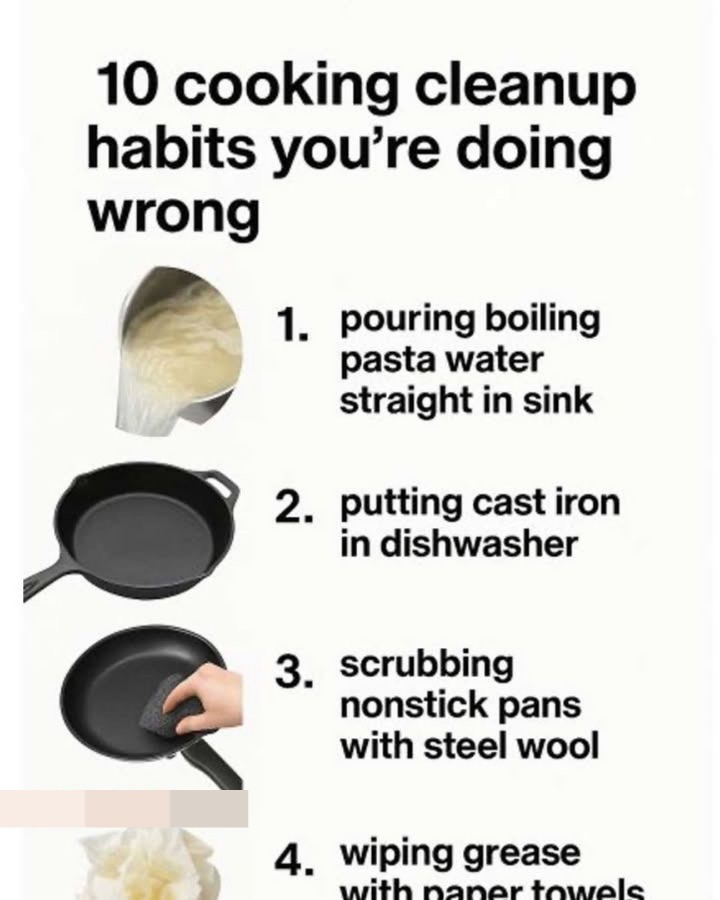
1. Pouring Boiling Pasta Water Straight Into the Sink
When you pour boiling pasta water directly into the sink, you risk damaging your plumbing. The heat can weaken or warp PVC pipes over time, leading to leaks or costly repairs. Instead, consider using a pasta pot with a built-in strainer or a separate colander placed in the sink. Let the water cool slightly before pouring it out to minimize the risk.
Additionally, pasta water is rich in starch and can be reused to thicken sauces or soups, or even to water plants. By capturing and cooling it rather than pouring it directly away, you can enhance your dishes or contribute to a sustainable practice.
2. Putting Cast Iron Cookware in the Dishwasher
Cast iron cookware is incredibly durable, but it requires specific care to maintain its seasoning and prevent rust. Putting cast iron in the dishwasher exposes it to excessive moisture and harsh detergents, which can strip away the seasoning and lead to rust. Instead, clean your cast iron with a scrub brush or sponge using hot water. If necessary, use a small amount of mild dish soap and dry it thoroughly before applying a thin layer of oil to preserve the seasoning.
3. Scrubbing Nonstick Pans with Steel Wool