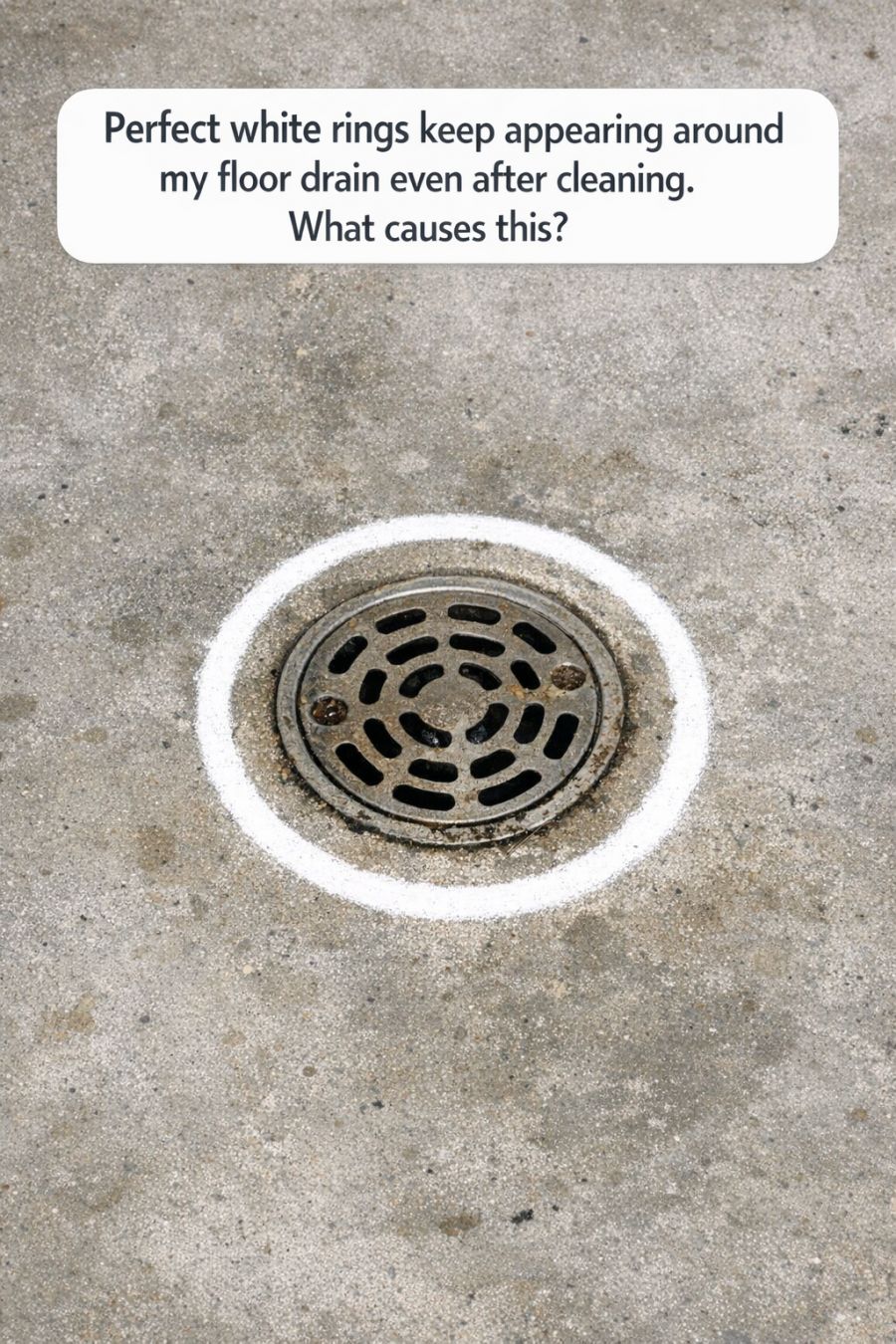
If you’ve ever noticed perfect white rings forming around your floor drain soon after a thorough cleaning, you’re not alone. These mysterious rings can be frustrating, especially after you’ve put in the effort to scrub them away. Understanding what causes these rings is the first step to effectively managing and preventing them.
Floor drains are designed to efficiently remove water and prevent flooding, but they can also become a breeding ground for unsightly stains. The white rings you see could be the result of various factors, each contributing to the persistence of these marks. This article will delve into the common causes and offer solutions to keep your floor drain clean and ring-free.
1. What Those Mysterious White Rings Around Your Floor Drain Really Are
The white rings around your floor drain are often mineral deposits left behind by water. These deposits can form a visible outline around the drain, particularly if the water in your home has a high mineral content.
Another possibility is that the rings are formed by soap scum or residue from cleaning products. These substances can accumulate over time, especially if the drain is not regularly cleaned or if the cleaning process does not fully remove these residues.
2. How Evaporated Mineral Residue Creates a Perfect White Outline
When water evaporates, it leaves behind any minerals that were dissolved in it. This is particularly common with hard water, which contains high levels of calcium and magnesium. As water sits around the drain and evaporates, these minerals can accumulate and form a visible ring.
The process is gradual but persistent, with each evaporation cycle adding a little more to the deposit. Over time, this creates a defined white outline that can be difficult to remove with simple cleaning methods.
3. Hard Water: The Hidden Culprit Behind Stubborn White Drain Rings
Hard water is a common issue in many households and is known for leaving mineral deposits on fixtures and surfaces. The high concentration of calcium and magnesium in hard water can lead to significant build-up around drains.
When hard water dries, it leaves behind mineral deposits that can form rings or stains. This is often exacerbated in areas with frequent water exposure, such as bathrooms and kitchens, where the water is allowed to sit and evaporate around the drain.
4. Soap Scum and Cleaning Product Build-Up Masquerading as Mineral Stains
In addition to mineral deposits, soap scum and cleaning products can also contribute to the formation of white rings. These substances can adhere to surfaces and, when mixed with hard water, create a stubborn residue.
Soap scum is particularly insidious because it can form a film that traps dirt and other particles, making it difficult to remove with regular cleaning. Over time, this film can build up and appear as a white ring around your drain.
5. Micro-Leaks, Condensation, and Slow Seepage Around the Drain Flange
Micro-leaks and condensation can also contribute to the formation of white rings around a floor drain. Even a small, slow leak can provide enough moisture to support the formation of mineral deposits over time.
Condensation can occur when there is a significant temperature difference between the water and the surrounding air, leading to moisture accumulation on the surface around the drain. This moisture can then evaporate, leaving behind mineral deposits that form white rings.